
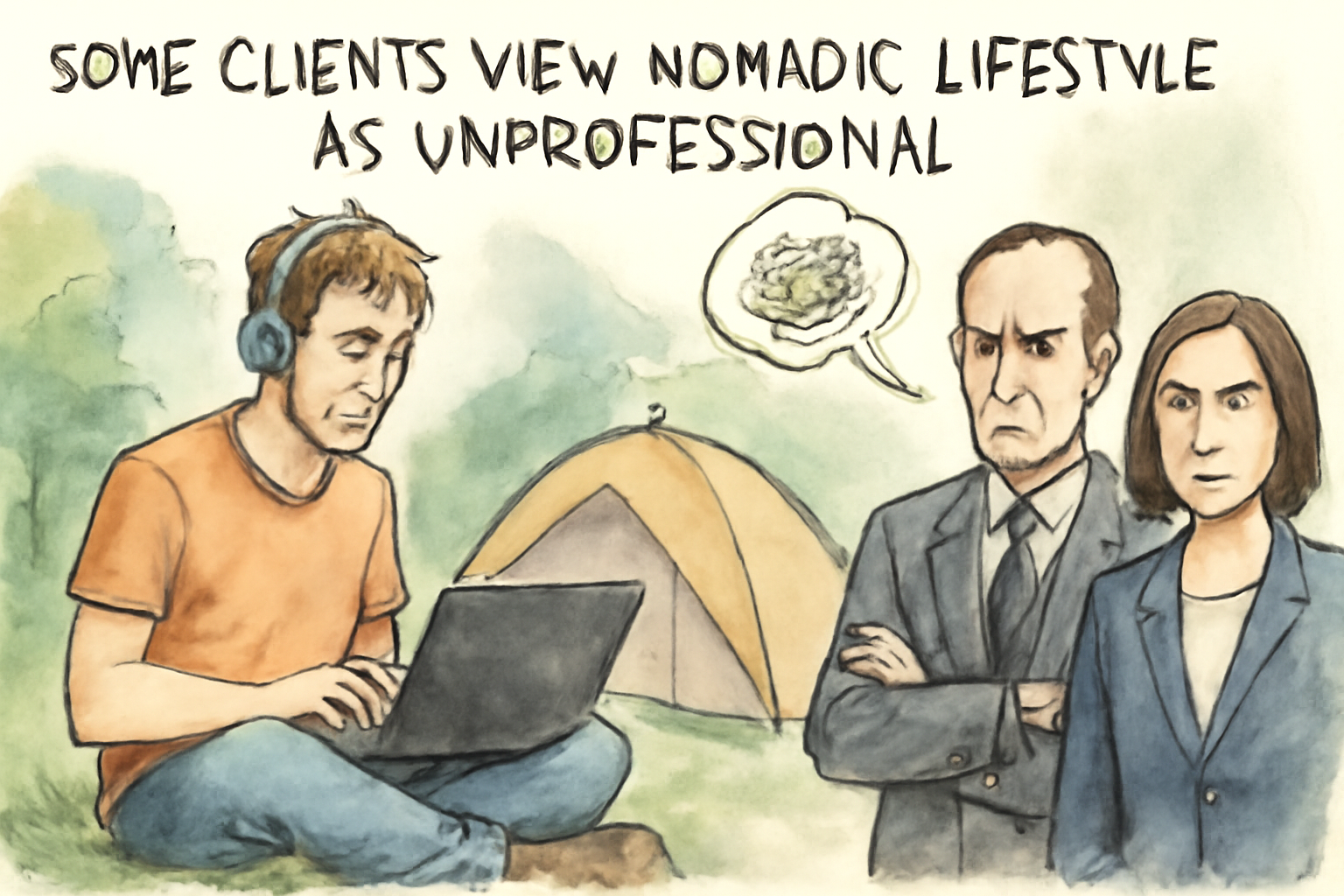
Digital nomads often face skepticism from clients regarding their professional credibility. This gap in perception can stem from a variety of factors unique to the nomadic lifestyle.
To begin with, the absence of a physical office can lead to doubts about reliability and permanence. Clients accustomed to traditional business formats might question the legitimacy of a business entity that lacks a fixed address. This is compounded by the physical distance and time zone differences that can complicate synchronous communication and prompt fears about responsiveness and accountability.
Moreover, a digital nomad often faces biases due to the perceived transient nature of their lifestyle. Clients may be concerned about a nomad’s ability to maintain focus and consistency over long-term projects due to frequent traveling. The perception of a "vacation-like" lifestyle can mistakenly lead clients to believe that a digital nomad prioritizes travel over work.
To mitigate these credibility concerns, digital nomads can employ several strategies. First, maintaining a professional online presence with a well-crafted website and strong LinkedIn profile can help establish legitimacy. Clear communication of work hours and availability, along with a structured workflow, can also alleviate doubts regarding accountability. Providing testimonials from previous clients and showcasing a portfolio of completed work may further reinforce a freelancer’s reliability and capability.
Building client trust hinges on consistency and professionalism, regardless of location. By proactively addressing potential concerns and emphasizing the quality of their work, digital nomads can bridge the credibility gap and foster robust professional relationships.